You do not have to start over to get better hearing.
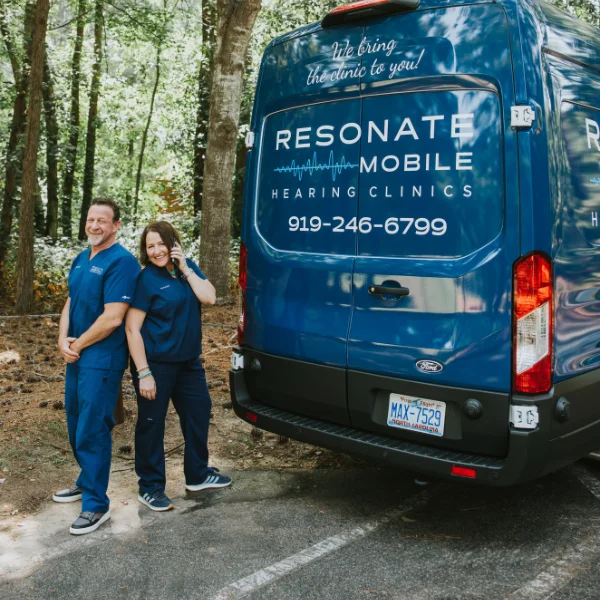
Serving Raleigh, Cary, and Apex — Dr. Franklin comes to your home.

- Board-certified Doctor of Audiology (Au.D.) with three decades of clinical experience
- Mobile clinic model — programming, real ear measurement, and repair equipment travel to your home, completed in a single visit
- Works on all major manufacturers' devices regardless of original source — no purchase required
Existing hearing aid optimization: getting what you paid for
Disappointment with hearing aids is often a fitting problem rather than a device problem. If a hearing aid was programmed from manufacturer defaults and never verified in your ear, it can be several decibels off target in the frequencies that carry consonant clarity — and it will feel dull, tinny, or simply not worth wearing. That is fixable, usually with the aids you already own. Optimization starts with fresh measurement: a current diagnostic evaluation, since hearing changes, and real ear measures on your existing devices to see what they are actually delivering at your eardrum. We compare that against the prescriptive target for your loss and correct the difference. We also check the things that quietly degrade performance — a poorly sealing dome, wax-blocked receivers, worn tubing, dead microphone ports, features switched on or off inappropriately, unused programs. Then we tell you the truth about what you own. If your devices can be brought to target and serve you well, we optimize them and you keep them. If the technology genuinely cannot meet your loss or your listening demands, we will say so plainly and show you the measurements behind that conclusion.
Hearing aid reprogramming: settings matched to hearing you have now
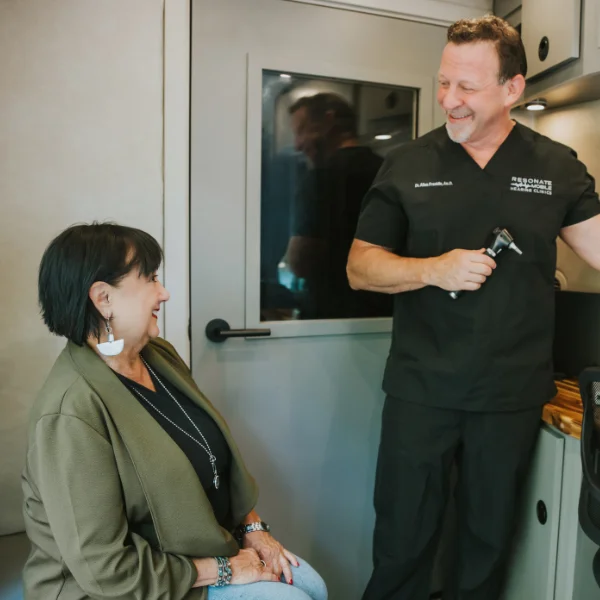
Hearing aids are not set-and-forget. Hearing shifts over years, the settings that felt right during your first month are rarely right at month twelve, and life changes — a new job, a hearing spouse, a move to a noisier home — change what you need from the devices. Reprogramming brings the settings back in line with current measurements and current demands. We reprogram devices from every major manufacturer, including aids purchased elsewhere — from a big-box retailer, a clinic that closed, a provider you have moved away from, or a practice you would rather not return to. Adjustments are verified with real ear measures rather than made by ear, and we re-check them, so a change you can describe becomes a change we can prove. Because the programming hardware travels in the van, this happens in your driveway in a single visit.
Tinnitus assessment and management: more is treatable than most patients are told
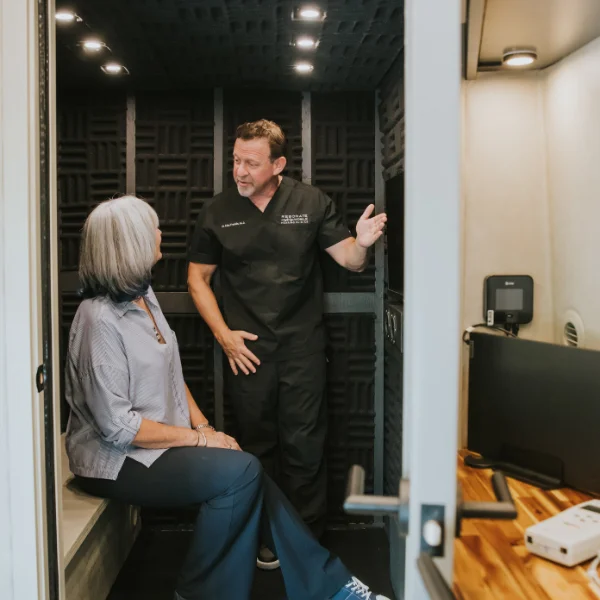
Tinnitus — ringing, buzzing, hissing, or humming with no external source — affects a large share of adults, and for some it disrupts sleep, concentration, and mood. Being told to live with it is not a treatment plan. There is no pill that eliminates tinnitus, but there is a well-established body of clinical work that reduces how loud, how intrusive, and how distressing it is. We begin with assessment, because tinnitus is a symptom. A full diagnostic evaluation identifies the hearing loss that accompanies most cases and screens for findings that require a physician — one-sided or pulsing tinnitus, sudden onset, dizziness. We characterize the tinnitus itself with pitch and loudness matching and measure its real-world impact with a validated handicap questionnaire, which also gives us a score to track against. Management is then built for your case, and for most patients it works on two fronts at once: restoring the sound your brain is missing, and changing your relationship to the signal. Progress is measured with the same questionnaire rather than assumed, and expectations are set honestly from the first appointment.
Hearing aid repair
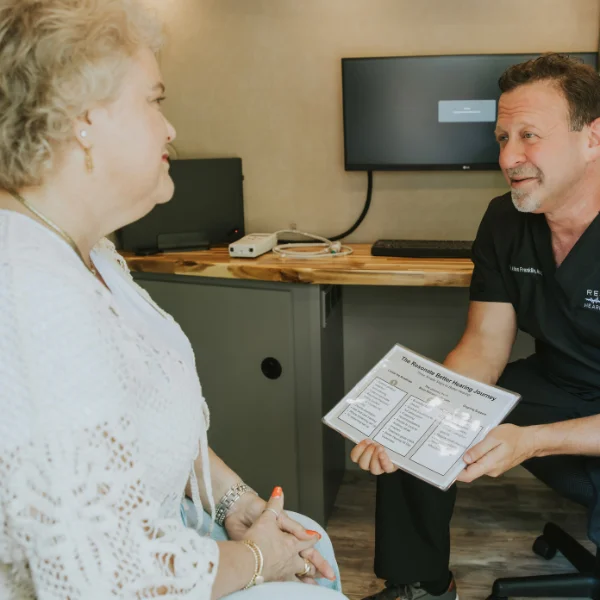
Most hearing aids that stop working have not failed electronically. Wax and moisture block receivers and vents, wax guards clog, domes tear, tubing hardens and cracks, microphone ports fill with debris, and battery contacts corrode. These are repairs we make on the spot, at your kitchen table, with the aid working again before we leave. In-house service covers cleaning and deep vacuum cleaning, wax guard and dome replacement, retubing custom earmolds, receiver and filter replacement, moisture treatment, and diagnostic listening checks to isolate what is actually wrong. When a device does need to go back to the manufacturer, we handle it: we verify the fault, check warranty and repair status, package and ship it, and reprogram and re-verify it when it returns rather than simply handing it back to you. We service all major manufacturers and most brands, whatever the original source of the devices — and if your aids are beyond economical repair, we will tell you that instead of running up a bill.
Custom earmolds and earplugs: fit from your own ear, not an average one
Foam plugs and stock domes are built for an average ear canal, which is why they work loose, leak sound, and stop being comfortable after an hour. A custom product is made from a silicone impression of your own ear, so it seals reliably, stays put, and can be worn far longer without irritation. We take impressions in the mobile clinic — otoscopy first, then a quick, comfortable procedure that takes only a few minutes per ear — and order the finished product from a custom laboratory. When it arrives we fit and check it, and we adjust or remake anything that does not seal or sit correctly. For hearing aid wearers, a custom earmold often resolves feedback whistling and the hollow sound of an unsealed fit at the same time. Hearing protection deserves the same rigor as hearing correction. Noise-induced hearing loss is permanent and preventable, and protection that fits properly is protection that actually gets worn.
TV Streaming
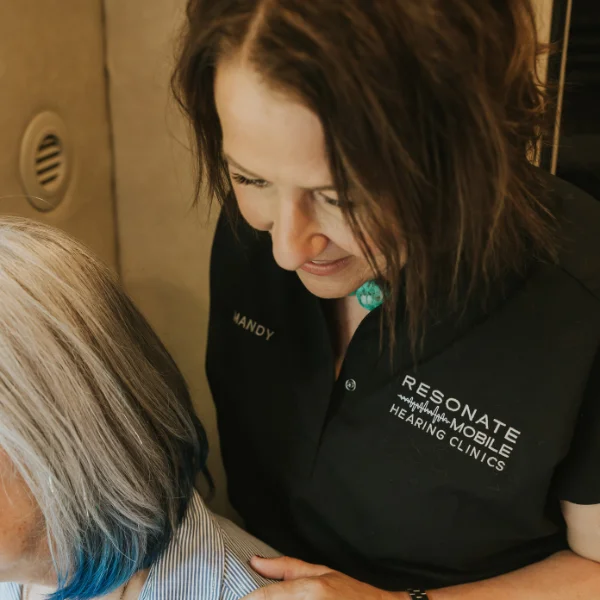
Television is where most of our patients spend the most listening hours, and it is one of the hardest signals to follow: compressed dialogue, background scoring, and a speaker pointed at the wall behind the screen. Streaming sends the audio straight from the television into your hearing aids, and the improvement in perceived clarity is dramatic and immediate. It is often the change patients notice most. Because we are already in your home, we do the whole thing: look at your actual television to assess what it supports, source the right streaming equipment for your devices, connect and configure it, balance it against the room, and demonstrate it until you can work it yourself. This is included when your hearing aids are purchased from us. If your aids came from somewhere else, we are glad to do it for a service charge; call, and we will tell you what is involved.
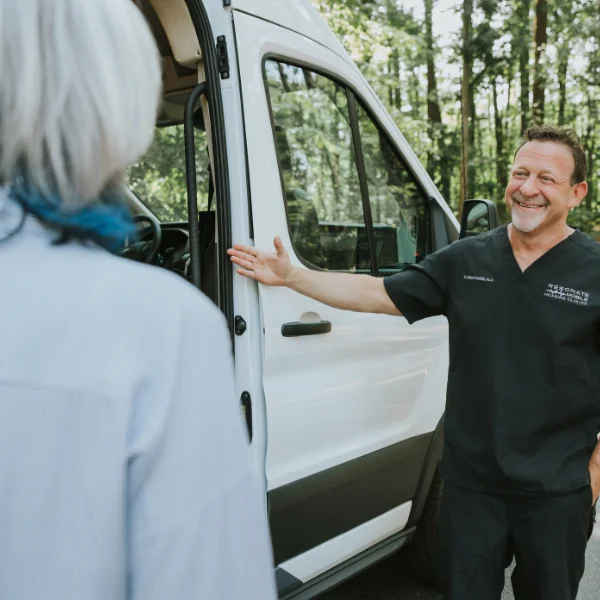
You do not need to have purchased devices from us, and in many cases we can help without you buying anything at all.
Common Questions
Can you work on hearing aids I bought somewhere else?
Yes — Dr. Franklin works with devices from every major manufacturer, regardless of where they were purchased. That includes hearing aids from big-box retailers, closed practices, and providers you have moved away from. The original source of the devices has no bearing on what we can do.
How do I know whether my hearing aids need optimization or replacement?
That question gets answered at the optimization visit, not before it. A current hearing evaluation and real ear measurement show exactly what your devices are delivering at your eardrum compared to what they should deliver for your loss. If the devices can be brought to target and serve you well, we optimize them. If the technology genuinely cannot meet your loss or listening demands, we say so plainly and show you the measurements that support that conclusion.
What if I'm not sure which service I actually need?
Most patients call describing a problem — a whistle, a device that went quiet, ringing that keeps them awake, aids that never sounded right — rather than a service category. Describe what is happening and Dr. Franklin will tell you what it likely is, what it takes to address it, and whether it requires an appointment at all. Some situations can be sorted out on the phone.
Do you need to come to my home, or can I bring the devices to you?
Resonate is a mobile practice — Dr. Franklin comes to you, in your home. There is no clinic location to visit. The programming hardware, real ear measurement equipment, repair tools, and impression materials all travel in the van, so every service on this page is available in a single visit at your kitchen table.
Does tinnitus treatment actually work, or is improvement unlikely?
The evidence-based approaches used in tinnitus management — amplification to restore missing sound, sound therapy, and structured habituation counseling — consistently reduce how loud, intrusive, and distressing tinnitus is for most patients. Tinnitus rarely disappears entirely, and that expectation is set honestly from the first appointment. What changes, for most people, is how much of their attention and distress it commands day to day.
Describe the problem — we'll tell you what it takes.
Call (919) 246-6799 to talk through what you are experiencing. Dr. Franklin will tell you what it likely is, whether it needs a visit, and what to expect. We come to you — serving Raleigh, Cary, Apex, and the surrounding North Carolina Triangle.